Edit Content

Dr. Noon HEART

Retinal-based cardiovascular

risk assessment for earlier prevention

Clinically validated algorithm

CACS-aligned risk output

Three-level risk stratification

Predict & prevent

Detect cardiovascular risk early, when intervention can change lives

Cardiovascular risk often remains hidden until symptoms or acute events occur. For over 150 years, clinicians have recognised that the retina can reveal early signs of cardiovascular disease.

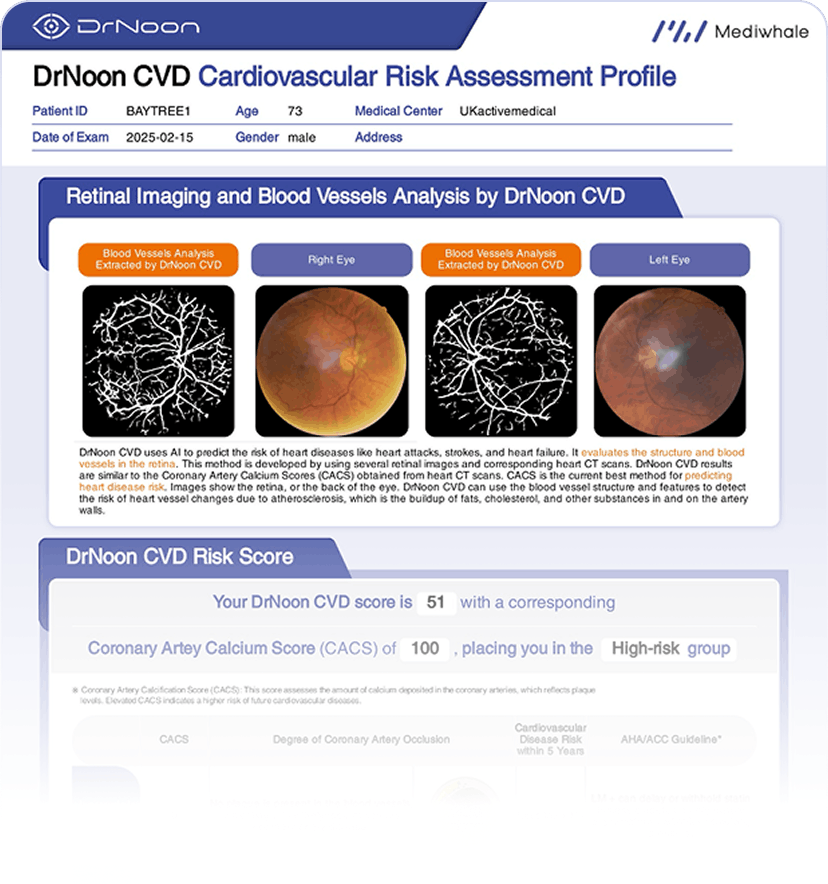
Dr. Noon HEART uses advanced AI to analyse subtle vascular patterns within standard retinal images, translating these biological signals into measurable cardiovascular risk indicators.

By identifying microvascular changes linked to cardiovascular disease before symptoms appear, Dr. Noon supports earlier triage, prevention planning, and timely clinical decision-making across routine care and screening settings.

Ocular signs of CVD

Retinal blood vessel changes​

Ocular cholesterol deposits​

Optic disc swelling

Diabetic retinopathy​

Retinal vein occlusion​

Validated cardiovascular risk stratification (CACS-predicted)

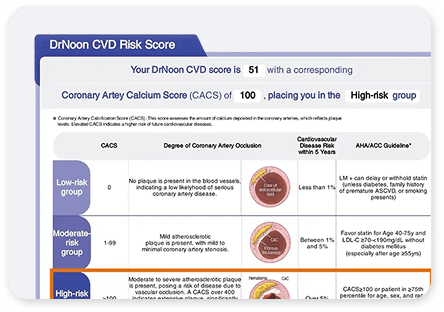
Built on clinically validated algorithms, Dr. Noon HEART draws on published evidence for deep learning models that predict CACS from retinal photographs to enable cardiovascular risk stratification. It supports more actionable risk assessment, with clearer separation into low, moderate, and high-risk groups to guide prevention and follow-up planning.

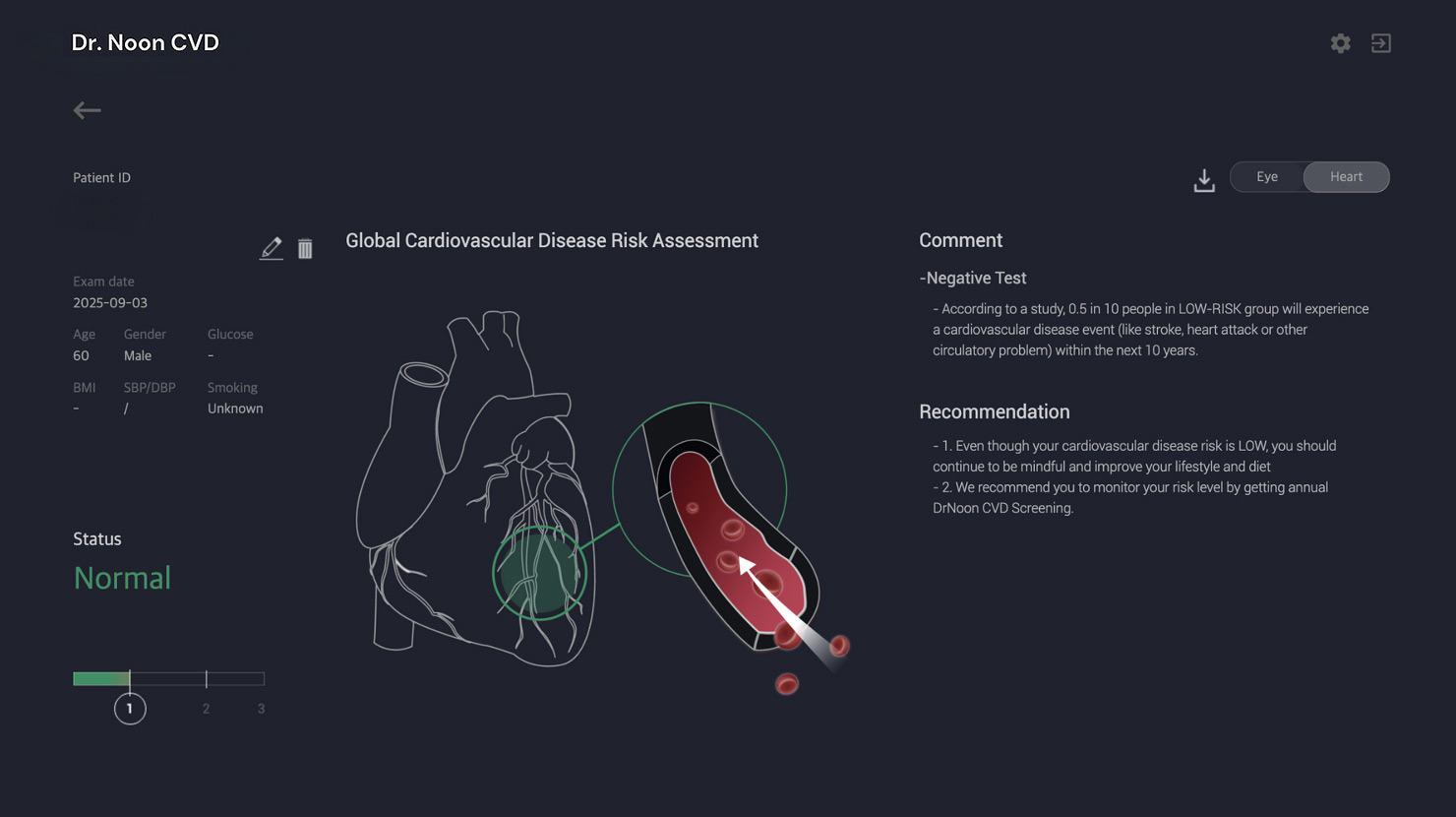
The Heart Score (CACS-aligned)

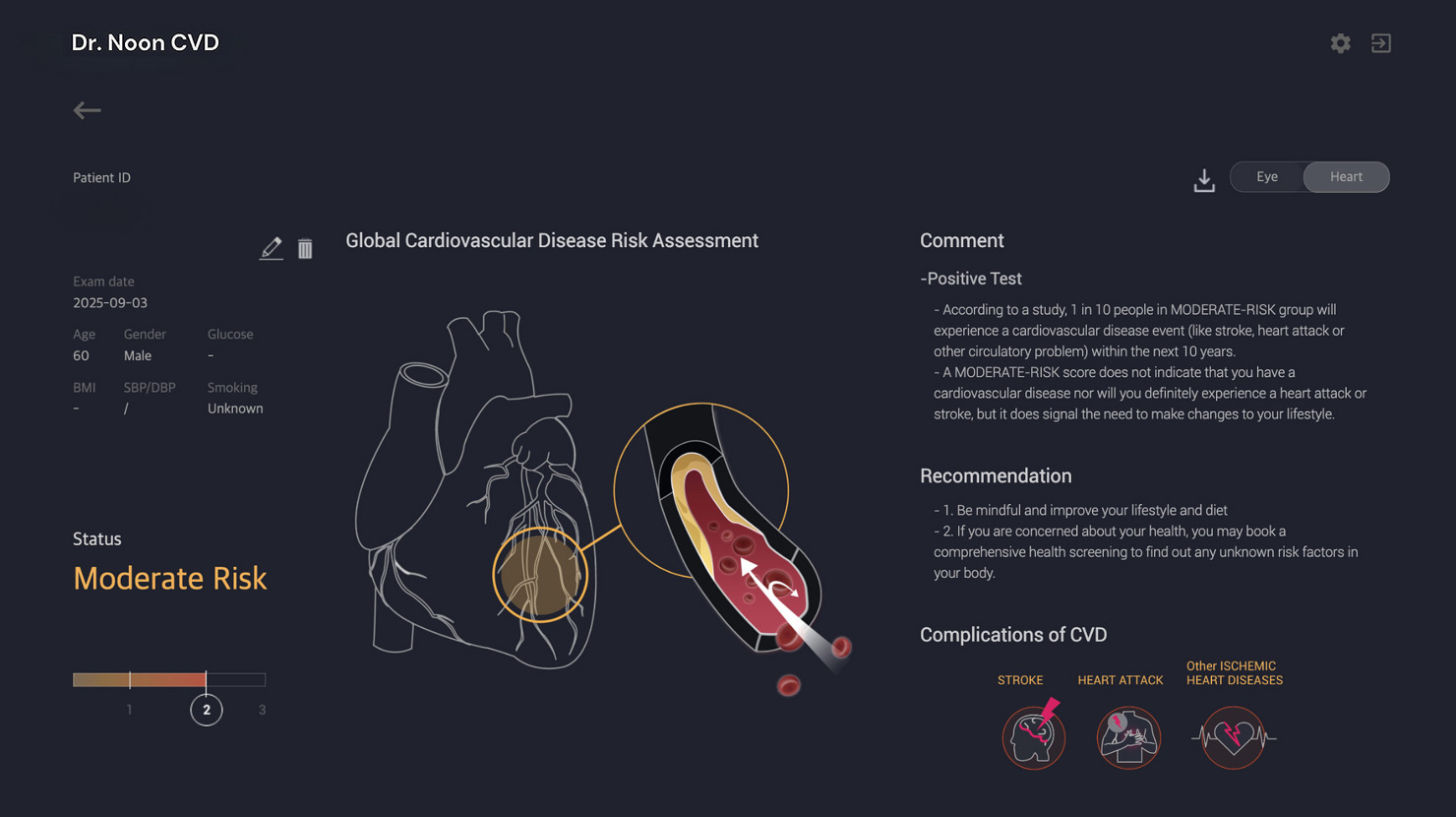
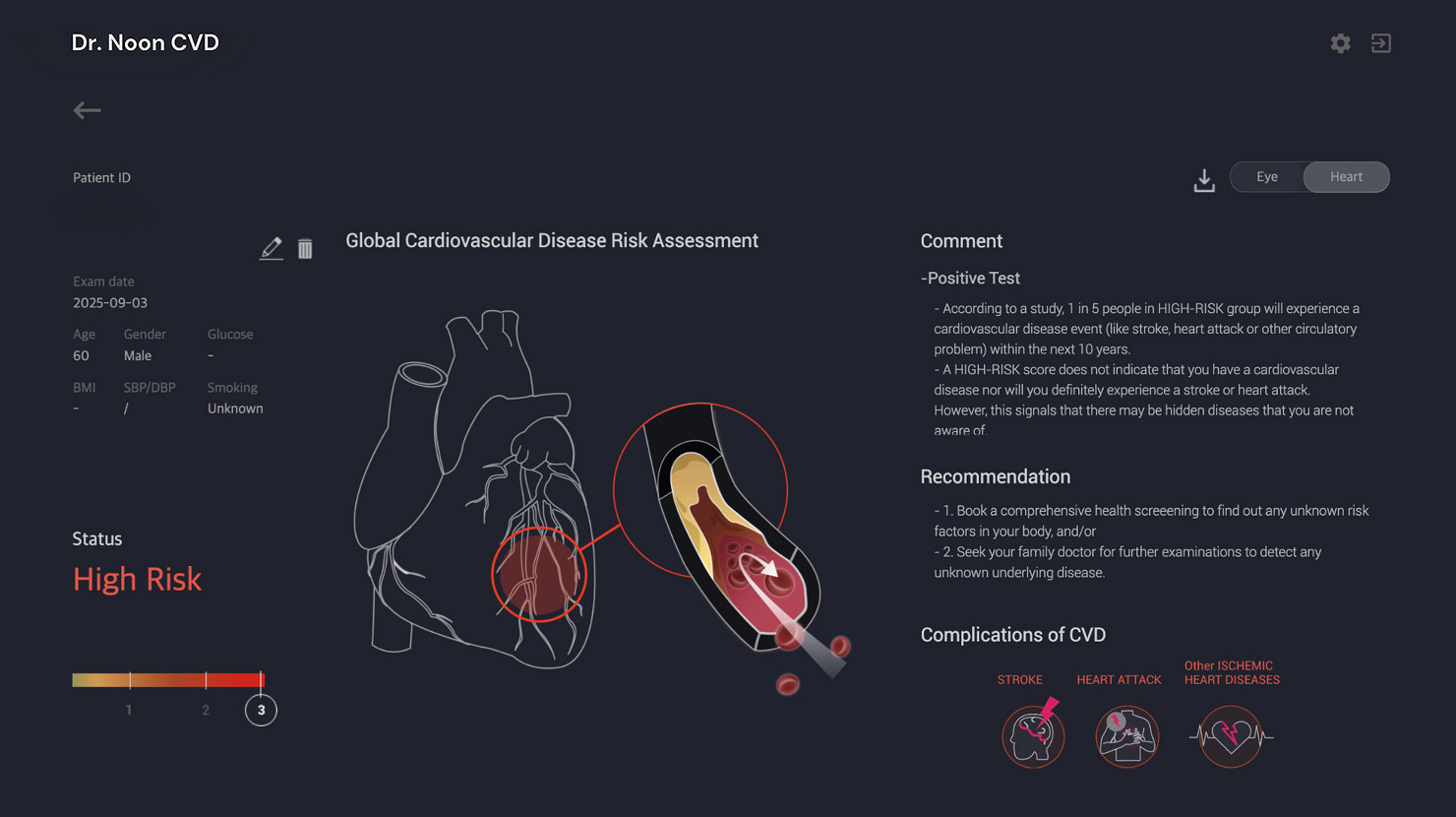
Dr. Noon HEART outputs a CACS-aligned heart risk score and places each patient into a clear risk band. This makes the result fast to interpret in-clinic and easy to use for triage, patient discussion, and next-step planning.

Output at a glance

AI-powered retinal screening for CVD risk detection

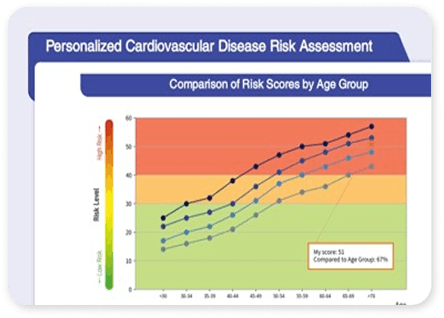
CVD risk summary

A clear snapshot of cardiovascular risk from the retinal scan, including key context to support a fast, confident interpretation.

Risk stratification

A CACS-aligned result that categorises risk (Low / Moderate / High) and shows age-group context, making it easier to triage quickly and explain results to patients.

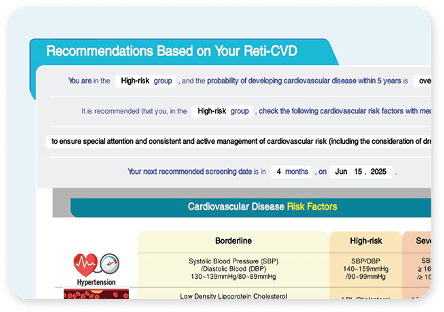
Clinical recommendations

Guidance to support prevention planning and next steps, including risk-factor prompts and follow-up direction where appropriate.

CVD screening comparison

Built on clinically validated algorithms, Dr. Noon HEART draws on published evidence for deep learning models

Dr. Noon HEART
Heart CT
Carotid Ultrasound
Pulse Wave Velocity

Type

Type

Retina-based coronary calcium score prediction

Imaging with radiation

Ultrasound-based IMT

Vascular stiffness measure

Ease of Use

Ease of Use

Easy

(Simple retinal photo)

Difficult

(Needs specialized CT machine)

Difficult

(Needs trained sonographer)

Difficult

(Needs specialized equipment)

Accessibility

Accessibility

High

(Suitable for any point-of-care)

Low

(Tertiary care only)

Low

(Tertiary care only)

Low

(Tertiary care only)

Footprint & Equipment

Footprint & Equipment

Small

(Requires only fundus camera)

Large

(Expensive CT scanner required)

Large

(Handheld device + trained operator)

Large

(Niche equipment, not widely used)

Radiation Exposure

Radiation Exposure

None

Yes

(Involves radiation)

None

None

Cost

Cost

Low

Affordable

High

(Expensive)

Moderate

(Varies)

Moderate

(Varies)

Turnaround Time

Turnaround Time

Fast

(Instant AI result)

Slow

(Multi-step processing)

Slow

(≥10 min + post-analysis)

Variable

(Depends on setup)

Operator Dependency

Operator Dependency

Low

(Minimal training needed)

High

(Requires technician, radiologist)

High

(Sonographer or physician required)

Medium

(Operator influences result)

Risk Prediction Accuracy

Risk Prediction Accuracy

High

(Comparable to CACS)

High

(Current gold standard)

Moderate

(Lower than CACS)

Moderate

(Lower than CACS)

Deployable across clinics, wellness centres, and screening programmes

Designed for both routine appointments and high-volume screening, Dr. Noon fits into standard clinical spaces and flexible environments, supporting consistent results without relying on specialist availability. Suitable for single-site practices through to multi-site programmes.

Ideal for providers looking to expand preventive screening without adding complex infrastructure.

Clinic-ready

works in exam rooms using standard retinal imaging workflows.

Programme-ready

supports high-throughput screening in community and wellness settings.

Multi-site scalable

consistent deployment across locations with central oversight.

Accessed from anywhere

results can be reviewed and managed across sites via cloud access where appropriate.

Explore how Dr. Noon fits your setting

Eyecare Professionals

Expand routine eye exams beyond vision care with a service that builds trust, increases retention, and helps your practice stand out.

Healthcare Professionals

Dr. Noon enables early-stage screening, with pre-symptom detection outperforming traditional methods such as CT scans.

Are you a patient?

Find clear guidance on the screening process, reports, and next steps.

Trusted recognition from healthcare and innovation awards

2025 Digital Health Awards Rising star winner

Top Innovator Awards 2025

CKD Challenge 2024 1st place winner

2023 CES Innovation Awards

1st place winner in two categories 2024

Ready to bring Dr. Noon into your practice?
Start transforming healthcare today.

Seamless onboarding with training and dedicated support.

Evidence-backed. Clinically validated

Dr. Noon technology is supported by over 50 peer-reviewed publications across leading medical journals, demonstrating performance in cardiovascular and retinal disease detection.