
Patient resources
Get to know how Dr. Noon works — and what your results mean for your health.
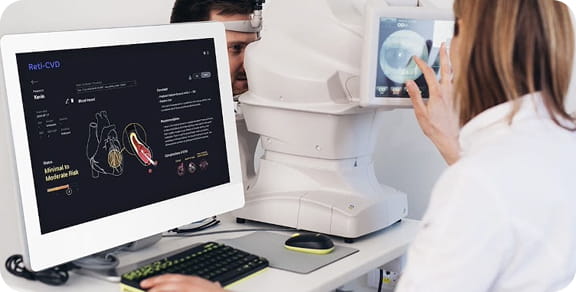
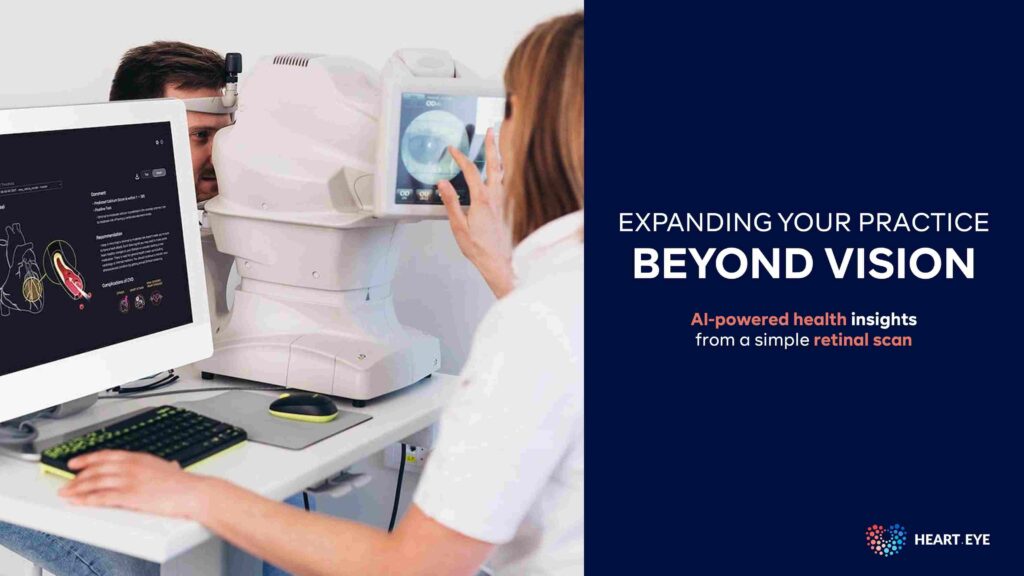
Your eye exam does more than check your vision. Learn how AI technology can now detect early signs of heart disease — all from a simple, non-invasive scan.

Received a DR.NOON result? This guide helps you make sense of your cardiovascular risk score and percentile — and what steps you can take next.
Downloads
Please find below a some resources to help you get started with Dr. Noon.
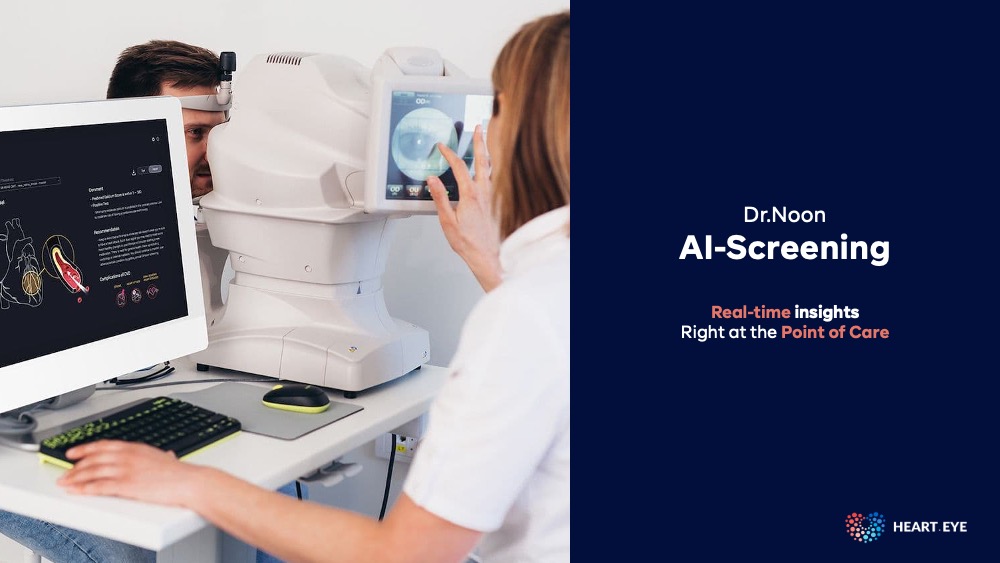
Dr. Noon quick start video
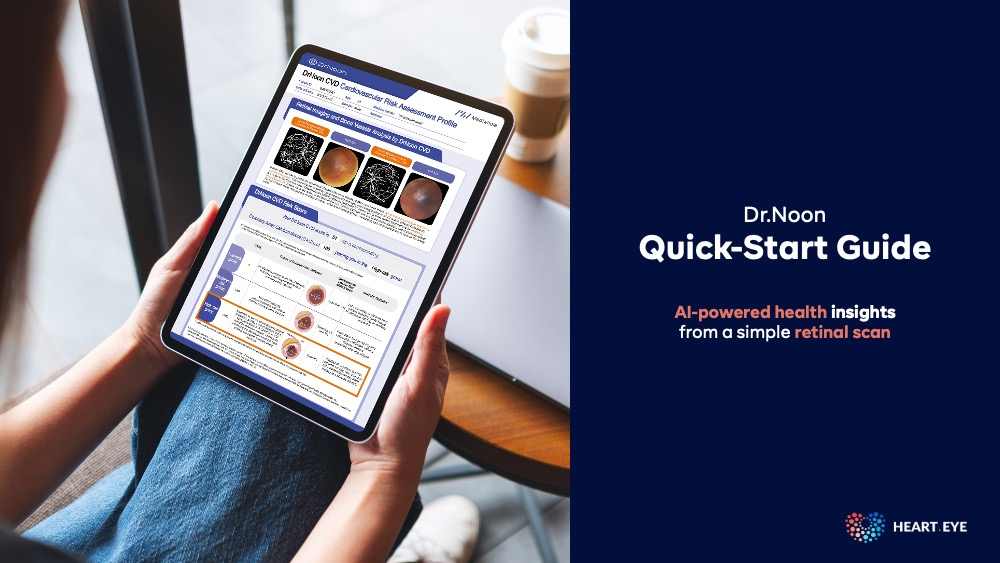
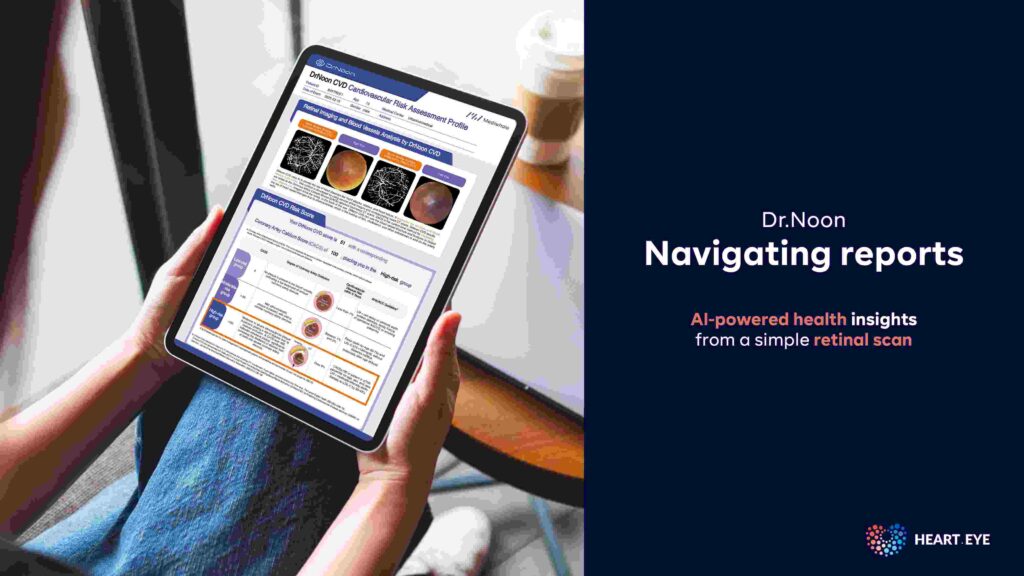
Use of this software is governed by our End User License Agreement (EULA) and Privacy Notice, attached. These documents are also available on our website.
For important information on product usage and safety, please read the Instructions for Use (IFU).
Deep learning papers
Below are selected white papers and research articles that explore the science and benefits behind the Heart-Eye platform.
Cardiovascular disease risk assessment – European Heart Journal – Digital Health (pdf).pdf
Cardiovascular risk stratification using coronary artery calcium scores – www.thelancet.com (pdf)
Non-invasive chronic kidney disease risk stratification tool – npj Digital Medicine (pdf)
Retinal biomarker (Reti-CVD) in the prediction of cardiovascular disease – BMC Medicine (pdf)
Pivotal trial of a deep-learning-based retinal biomarker – American Medical Informatics Assoc (pdf)
Prediction of systemic biomarkers from retinal photographs – www.thelancet.com (pdf)
Cardiovascular medicine 2021 digital health and innovation European Heart Journal (pdf)
Artificial intelligence-enhanced patient evaluation bridging art and science – European Heart Jo (pdf)
Everything you need to know
Frequently asked questions
What is Dr. Noon?
Dr. Noon CVD is an AI-powered screening tool that evaluates your personalised risk of cardiovascular disease (CVD) simply by analysing retinal photographs. It is validated and approved by the MHRA for clinical use in the UK (and in other territories).
Why look at your eye to check heart health?
Your retina is one of few places in the body where blood vessels can be directly observed. The blood vessels at the back of your eye seen directly with a specific type of camera (fundus camera)—without the need for needles. Arteries carry blood away from your heart to organs throughout your body. If those small vessels in your retina start to narrow or show signs of damage, it often means similar changes are happening in other arteries— such as those supplying your heart. As a result, your eyes are a window into your heart.
How does it work?
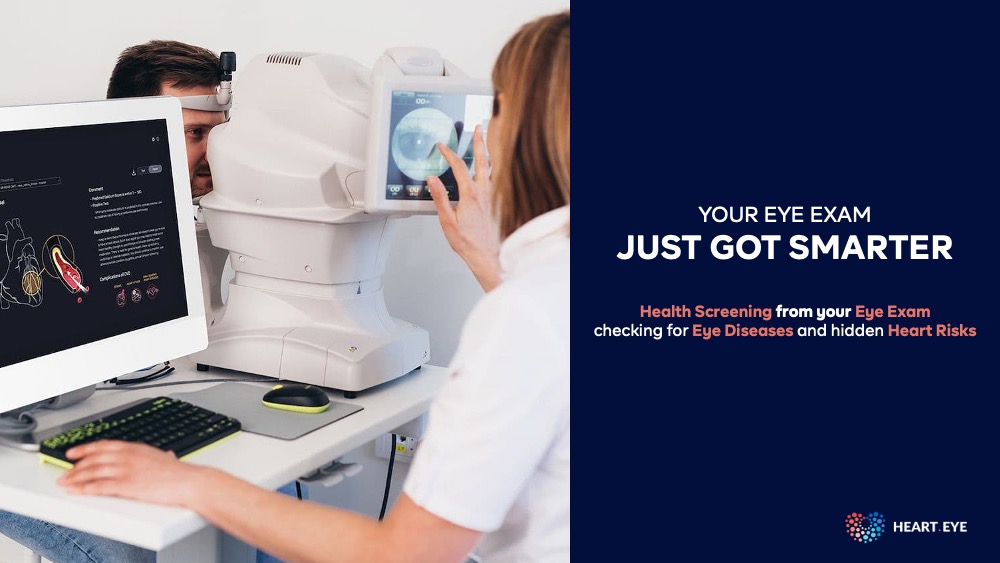
Retinal Imaging: Your optometrist or trained technician takes a quick digital photograph of each eye using a standard fundus camera (no dilating drops or special preparation is required).
AI Analysis: The images are securely uploaded to a cloud platform. Dr. Noon’s AI instantly analyses these images to give your predictive scoring. Deep-learning algorithms detect subtle changes in the tiny blood vessels of your retina. These microvascular patterns correlate closely with arterial health elsewhere in your body—including the coronary arteries.
Risk Estimation: You will receive a clear and personalized report with practical advice is generated, that you will review with your practitioner. By comparing your retinal-vessel characteristics against a database of several hundred thousand patients (including the UK Biobank cohort), the system produces a personalised five-year CVD risk score.
Is it accurate?
Yes – Dr. Noon is backed by rigorous clinical research and validated in peer-reviewed publications:
Clinically Validated: Publications in world-leading journals including The Lancet Digital Health and JAMIA demonstrate that Dr. Noon’s performance in predicting CVD risk is on par with (and in many cases more convenient than) CT-based calcium scoring.
Large, Diverse Data: Trained on hundreds of thousands of retinal images from patients of all ethnicities, the algorithm has been thoroughly tested across multiple cohorts (e.g. UK Biobank, CMERC-HI).
MHRA Approval: To gain UK regulatory clearance, Dr. Noon was required to demonstrate clinical effectiveness and safety in prospective trials.
For more information on publications, please visit our Resources Section.
How does it compare to a ct scan of my heart?
Because Dr. Noon measures vessel changes directly (rather than calcium), it can reflect risk modifications arising from lifestyle or medication more dynamically than CT.
Feature | Dr. Noon CVD | HEART CT Calcium Score |
Radiation Exposure | None / Not Required | Yes (ionising radiation) |
Contrast Dye | None / Not Required | Often required (risk to patients with kidney concerns) |
Cost | Low – Comparable to a routine retinal photograph | High – Requires specialist imaging equipment, prep-team and radiologist reporting |
Accessibility | Widely available in primary-care, and low-cost/easy deployment in most clinical environments. | Limited to major hospitals and imaging centres, and requires substantial infrastructural planning. |
Turnaround Time | Result in ≈ 1 minute | Often several days to weeks (prep + scan + wrap-up + radiologist + cardiologist) |
Disease Marker | Direct assessment of microvascular changes. | Measures calcification plaque (calcium), which may not reflect early atherosclerosis |
Repeatability | Safe for frequent | Cumulative radiation dose restricts repeat scans |
Is Dr. Noon safe?
Yes – It’s painless, non-invasive, and suitable for most patients:
- Non-Invasive & Painless: No needles, no blood draws, no ionising radiation.
- No Contrast Agents: Unlike some CT protocols, there is no risk to kidney function.
- Suitable for All: Even patients with mild cataracts or stable glasses prescriptions can be imaged (as long as fundus photographs are clear).
- Repeatable at Zero Risk: Safe for follow-up scans as often as clinically required—ideal for monitoring changes over time.
How often should I be re-screened?
Dr. Noon will provide a recommended follow-up schedule in your personalized report. If your results indicate medium or high risk, or if you are feeling unwell, then please follow the guidance of your healthcare provider.
Is my data secure?
At HeartEye we take data privacy seriously. All retinal images and personal data are encrypted in transit and at rest, stored on secure servers compliant with GDPR and HIPAA (where applicable). Only authorised personnel and your clinician can access your report.
Can Dr. noon results replace a blood test or ecg?
No. Dr. Noon CVD is designed as a complementary screening tool. It adds unique, non-invasive insights into vascular health but does not measure cholesterol or electrical cardiac activity. Your GP may still recommend full blood panels, ECGs or imaging if indicated.
How long will the entire process take?
Dr. Noon’s AI instantly interprets the retinal images and provides your report. But, plan for 5-10 minutes in total including check-in and results discussion.
What happens during the appointment?
Your Dr. Noon appointment is quick, comfortable, and follows a simple 3-step process:
Capture: You’ll be seated in front of a fundus camera, and the technician will take a quick photo of each eye—no drops or special preparation needed.
Upload & Analyse: The technician will upload the images and basic demographics (age, biological-sex) into the system, and Dr. Noon will instantly analyse the scans.
Report & Review: You receive a clear report and personalized indicating your percentage risk, risk category (Low, Medium or High), and percentile compared to your peers. Your practitioner will review the results with you, and the report itself includes clear, practical recommendations tailored to your risk level. If needed, your practitioner and/or the report may also suggest further tests or a referral to your GP.
Do I need to fast or avoid caffeine beforehand?
No. Simply arrive at your appointment with standard eyewear. You can eat, drink (including tea or coffee) and continue usual medications as normal.
Is dilation of the pupils required?
Very rarely. Modern fundus cameras capture high-resolution images without dilation. If your optometrist deems dilation necessary (e.g. very small pupils), it will be explained beforehand.
How do I interpret my result?
You will receive your five-year CVD risk as a percentage and grouped it into one of three categories—Low, Medium or High. In each case, the report also compares your percentile risk to others of the same age and biological-sex.
Your DR. NOON report includes easy-to-understand explanations, visuals, and practical recommendations to help guide your next steps—whether that’s maintaining good habits or making changes to reduce risk.
You can find more resources and support by visiting our patient portal at hearteye.co.uk/patients.
Even with Dr. Noon’s high accuracy, it’s important to continue making healthy choices—because prevention is always more powerful than correction, and there may still be other undetected underlying conditions.
My result says I am low risk – what should I do?
If your Dr. Noon result shows a low risk, your chance of a cardiovascular event in the next 5 years is under 1%. That’s reassuring—but maintaining a heart-healthy lifestyle is still essential.
Dr. Noon provides a risk score for your cardiovascular screening, it also compares your results to others of the same age and biological sex and gives you a percentile rank. This guide is intended to help you interpret your risk score and percentile rank.
We Recommend that you:
- Maintain a heart-healthy lifestyle (including good blood pressure control, regular exercise, a heart-healthy diet, and avoiding smoking).
- Consider reviewing your result with a healthcare professional, if your percentile rank is above 50%
Even with Dr. Noon’s high accuracy, it’s important to continue making healthy choices—because prevention is always more powerful than correction, and there may still be other undetected underlying conditions.
My result says I am medium risk – what should I do?
If Dr. Noon identifies a moderate risk, your chance of a cardiovascular event in the next 5 years is between 1–5%. That’s not high—but it is a signal to stay proactive.
Dr. Noon provides a risk score for your cardiovascular screening, it also compares your results to others of the same age and biological sex and gives you a percentile rank. This guide is intended to help you interpret your risk score and percentile rank.
We Recommend that you:
- Maintain a heart-healthy lifestyle (including good blood pressure control, regular exercise, a heart-healthy diet, and avoiding smoking).
- Consider having your GP check your blood pressure, cholesterol, and BMI, and consider medication such as statin.
- Review your result with a healthcare professional, especially if your percentile rank is above 50%
- Dr. Noon complements QRisk2 calculations often used in GP practices, offering additional insight validated by world-leading cardiologists and approved by the MHRA in the UK.
Even with Dr. Noon’s high accuracy, it’s important to continue making healthy choices—because prevention is always more powerful than correction, and there may still be other undetected underlying conditions.
My result says I am high risk – what should I do?
A high-risk result means you may be at significantly increased risk of a heart attack or stroke in the next 5 years. You should act promptly—even if you don’t have symptoms. If you have symptoms such as shortness of breath, chest pain then you should consult your GP or call 111. If you have no symptoms at all, you may still wish to contact your GP to share this report with them, and to see if you need any additional tests to confirm the presence of heart disease or to modify any risk factors. ‘High-risk’ is often also dependent on sex and age. As we get older our risk of cardiovascular events will naturally increase and therefore this is one additional indicator to make lifestyle changes.
Dr. Noon provides a risk score for your cardiovascular screening, it also compares your results to others of the same age and biological sex and gives you a percentile rank. This guide is intended to help you interpret your risk score and percentile rank.
We Recommend that you:
- Make lifestyle changes (including good blood pressure control, regular exercise, a heart-healthy diet, and avoiding smoking).
- Consider having your GP check your blood pressure, cholesterol, and BMI, and consider medication such as statin.
- Review your result with a healthcare professional, especially if your percentile rank is above 50%
- Dr. Noon complements QRisk2 calculations often used in GP practices, offering additional insight validated by world-leading cardiologists and approved by the MHRA in the UK.
Even with Dr. Noon’s high accuracy, it’s important to continue making healthy choices—because prevention is always more powerful than correction, and there may still be other undetected underlying conditions.
Do I need to fast or avoid caffeine beforehand?
No. Simply arrive at your appointment with standard eyewear. You can eat, drink (including tea or coffee) and continue usual medications as normal.
Can Dr. Noon results replace a blood test or ECG?
No. Dr. Noon CVD is designed as a complementary screening tool. It adds unique, non-invasive insights into vascular health but does not measure cholesterol or electrical cardiac activity. Your GP may still recommend full blood panels, ECGs or imaging if indicated.
What if I have cataracts, glaucoma or other eye disease?
Provided the fundus photographs are clear enough for analysis, Dr. Noon can still assess your CVD risk. If imaging quality is compromised, your optometrist or technician will advise on repeat photography or alternative screening options.
FAQ - References
- Wong TY, McIntosh R. Hypertensive retinopathy signs as risk indicators of cardiovascular morbidity and mortality. Br Med Bull. 2005;73-74:57-70.
- Seidelmann SB, Claggett B, Bravo PE, Gupta A, Farhad H, Klein BE, et al. Retinal Vessel Calibers in Predicting Long-Term Cardiovascular Outcomes: The Atherosclerosis Risk in Communities Study. Circulation. 2016;134(18):1328-38.
- Rim TH, Lee G, Kim Y, Tham YC, Lee CJ, Baik SJ, et al. Prediction of systemic biomarkers from retinal photographs: development and validation of deep-learning algorithms. Lancet Digit Health. 2020;2(10):e526-e36.
- Rim TH, Lee CJ, Tham YC, Cheung N, Yu M, Lee G, et al. Deep-learning-based cardiovascular risk stratification using coronary artery calcium scores predicted from retinal photographs. Lancet Digit Health. 2021;3(5):e306-e16.
- Tseng R, Rim TH, Shantsila E, Yi JK, Park S, Kim SS, et al. Validation of a deep-learning-based retinal biomarker (Reti-CVD) in the prediction of cardiovascular disease: data from UK Biobank. BMC Med. 2023;21(1):28.
- Lee CJ, Rim TH, Kang HG, Yi JK, Lee G, Yu M, et al. Pivotal trial of a deep-learning-based retinal biomarker (Reti-CVD) in the prediction of cardiovascular disease: data from CMERC-HI. J Am Med Inform Assoc. 2023;31(1):130-8.